



More than 400,000 employers supported by furlough scheme in last month of operation, figures reveal
More than one million workers and over 400,000 employers were still supported by the Coronavirus Job Retention Scheme (CJRS) in its last month of operation, the latest figures reveal.Continue reading

HMRC asks sole traders to correctly report SEISS grants or “repay in full”
Sole traders who have not correctly reported their Self Employment Income Support Scheme (SEISS) grants may be forced to repay them in full, it has been warned.

Cautious welcome for Chancellor’s cut in business rates
The hospitality and retail industries have welcomed the business rates cut announced by Chancellor Rishi Sunak in his recent Autumn Budget.

Controversial basis period reforms delayed by one year, Government announces
Controversial changes to the basis period rules will be pushed back to 2024, the Government has announced.

How will the National Minimum Wage increase impact my business?
The National Minimum Wage (NMW) will increase across all age groups from next year, the Chancellor has announced.

Business rates to halve in hospitality, retail and leisure sector, Chancellor reveals
Business rates will be cut by 50 per cent in 2022/23 for firms in the hospitality, retail and leisure sectors, Budget 2021 documents have revealed.
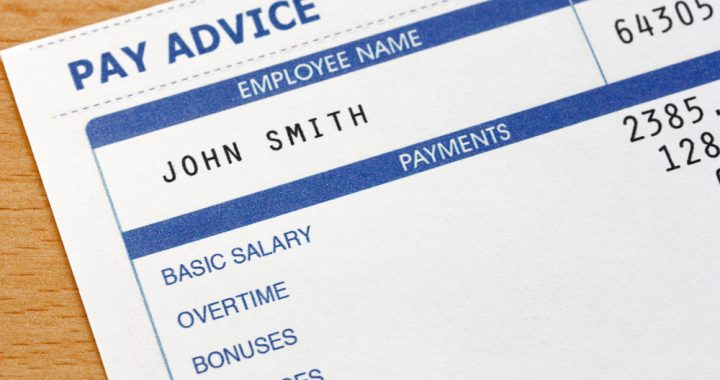
Pay bounces back strongly as economy recovers
The labour shortage appears to be proving beneficial to many workers as pay increased significantly in 2021, according to figures from the Office for National Statistics (ONS).

Are you a Self-Assessment taxpayer?
If you are, then keep reading…Continue reading

Rural businesses “more likely” to use personal finance than urban counterparts, study reveals
More than four in 10 businesses in the UK now use external finance to support growth and investment plans, a major study has revealed.

Updated requirements for submitting Corporation Tax CT600 Return
With the winding up of the Coronavirus Job Retention Scheme (CJRS) or furlough, at the end of September, it is vitally important that all employers are up to date with their Corporation Tax Form CT600, particularly over grants received from the scheme.
HM Revenue & Customs (HMRC) is looking to close any loopholes and ‘claw back’ any overpayments, such as claims for an employee who left the business while the scheme was in operation.
HMRC amended their CT600 guidance at the start of September to clarify how these entries should be presented, so businesses should seek immediate guidance from their accountants.
From April 2021, companies were required to disclose details of their CJRS claims and make a formal declaration in relation to the CJRS income received as part of its CT600 return.
As with the rest of the Corporation Tax CT600 Return, the director signing off the CT600 return must ensure that the information is correct and reported in the format that HMRC require.
The company should provide accurate information on the following for the CT600 return:
CJRS payments received in the period
- This is the amount received in the period covered by the CT600 return (and not the amount accrued).
- Do not deduct overpayments already assessed by HMRC, or amounts disclosed or repaid to HMRC.
- Do not deduct amounts repaid voluntarily.
- Add back any overpayments of amounts received in earlier periods that have been offset against payments received in this period.
The CJRS payment that the company was entitled to
- This is the total amount of CJRS payments received in the period that the company was entitled to claim.
- If the company was entitled to an amount at the time of the claim but was not entitled to retain this amount by the end of the period (for example if it was not used for the required purpose), then it should not be included in this amount.
- Include any amounts entitled to but repaid voluntarily.
CJRS overpayments already disclosed or repaid, including:
- Amounts already assessed by HMRC, whether paid or unpaid.
- Amounts voluntarily disclosed to HMRC as CJRS overpayments, whether paid or unpaid.
- Overpayments offset against subsequent CJRS payments received in later accounting periods.
- Do not include amounts received and entitled to but repaid voluntarily.
If an overpayment is due to be repaid to HMRC, this will be added to the company’s Corporation Tax liability reported on the CT600 return.
There are also new requirements in relation to the ‘Eat Out to Help Out’ Scheme.
For more information on amending your Corporation Tax CT600 Return please contact our expert team.
Can we help? Talk to our expert team